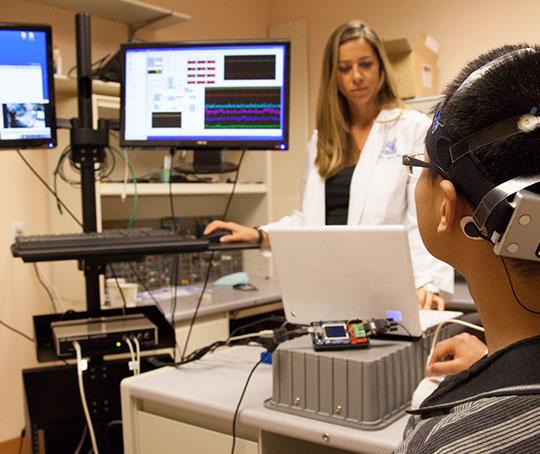
Brain-Computer Interface Advances are opening new possibilities for communication, healthcare, and human-computer interaction. A brain-computer interface (BCI) is a technology that detects brain signals and translates them into commands that a computer or another device can understand. These systems could help people with paralysis communicate, control a computer, or interact with assistive technologies without relying entirely on muscle movement.
Recent research has made progress in translating attempted speech into words, generating audible voices, and controlling digital interfaces. In June 2026, researchers reported long-term, independent home use of an implanted BCI for speech communication and computer cursor control by a person with severe paralysis. Nature Medicine research
These developments offer hope to people who have lost important abilities because of neurological conditions or injuries. However, BCI technology also raises serious questions about surgery, long-term safety, personal privacy, and access to treatment. Many systems remain experimental and require further testing.

Understanding these eight powerful Brain-Computer Interface Advances can help explain what this technology may achieve, where it stands today, and which challenges researchers still need to overcome.
Table of Contents
- Brain Signals That Restore Speech
- AI-Powered Brain Communication
- Brain-Controlled Computer Interfaces
- Movement Assistance for People With Paralysis
- Brain-Computer Interfaces for Everyday Use
- Non-Invasive Brain-Computer Interfaces
- Personalized Digital Voices and Avatars
- Improved Safety and Reliability
- Benefits and Risks of BCI Technology
- Future Outlook
- Frequently Asked Questions
1. Brain Signals That Restore Speech
One of the most important Brain-Computer Interface Advances involves helping people communicate when paralysis or neurological disease makes speaking difficult or impossible.
Normally, the brain sends signals to muscles involved in producing speech. When those signals cannot reach the muscles effectively, a person may understand language but struggle to express words aloud. A BCI can record neural activity associated with attempted speech and use computer models to translate that activity into text or synthesized speech.
How Brain-to-Speech Technology Works
In some experimental systems, researchers place electrodes on or within the brain to measure neural activity. Machine-learning models then identify patterns associated with the words a participant is attempting to say.
In April 2025, the US National Institutes of Health described research in which a brain-to-voice system generated more natural, streaming speech for a woman with paralysis who had been unable to speak following a stroke. The findings demonstrated the potential to make conversations more fluent. NIH research report
This progress could improve independence and reduce the frustration associated with slow communication tools.
However, these systems do not simply read every private thought. They are trained to decode particular neural patterns under specific conditions, and their performance depends on the participant, equipment, and model.
2. AI-Powered Brain Communication
Artificial intelligence is becoming an important part of modern BCI systems. Brain signals are complex, and their patterns vary between individuals and over time. AI models can help identify meaningful patterns and translate them into useful commands.
Faster and More Natural Communication
Traditional assistive communication tools may require a person to select letters, type words, or use eye movements. These methods can be helpful, but they may be tiring or slow for some users.
AI-powered BCIs aim to interpret attempted speech more directly. They can combine neural recordings with language models and speech-generation systems to produce words or audio.
The potential benefits include faster conversations, more natural communication, and improved access to digital services. Researchers are also investigating ways to preserve the user’s preferred voice and speaking style.

Nevertheless, AI decoding can make mistakes. A system might produce an incorrect word or sentence, especially when neural signals are unclear. For important conversations, users need ways to correct errors and confirm what the system communicates.
3. Brain-Controlled Computer Interfaces
Another important development allows people to control computer cursors and other digital interfaces using brain signals.
A conventional computer mouse requires hand movement. For someone with severe paralysis, even this basic interaction may be difficult or impossible. A BCI can instead detect neural activity associated with intended movement and convert it into cursor commands.
Potential Uses Beyond Communication
Brain-controlled interfaces could help users select text, open applications, navigate websites, and interact with digital tools. When combined with speech decoding, they may allow a person to communicate and control a computer using the same system.
A 2026 study published in Nature Medicine reported long-term, independent use of an implanted BCI for both speech and cursor control by one person with severe paralysis. This is an important step toward practical use outside closely supervised laboratory sessions. Read the research
However, results from an individual participant do not prove that the same performance will be achieved by everyone. Researchers still need to study larger and more diverse groups, including long-term usability and device reliability.
4. Movement Assistance for People With Paralysis
Brain-Computer Interface Advances may also help people control external devices when they cannot move their limbs normally.
BCIs can translate signals associated with intended movement into commands for a computer-controlled system. Depending on the technology, these commands may operate a robotic arm, an assistive device, or a digital representation of the user’s movement.
From Neural Signals to Physical Action
Researchers are exploring ways to connect brain-controlled systems with rehabilitation technologies and other assistive equipment. Such systems could eventually help some people perform selected tasks with greater independence.
However, controlling a physical device is more complicated than moving a cursor. A robotic arm must respond accurately, avoid collisions, and operate safely around people. Delayed or incorrect commands can create hazards.
These systems also require careful calibration and training. Their usefulness depends on how reliably they work in real environments, not just on whether they succeed in a controlled demonstration.
5. Brain-Computer Interfaces for Everyday Use
For BCI technology to become genuinely useful, it must work beyond specialized research laboratories. Users need equipment that is practical, reliable, comfortable, and manageable in everyday settings.
Some implanted systems require clinical teams to help with setup, calibration, and troubleshooting. Researchers are therefore investigating how people can operate these devices more independently.
Why Home Use Matters
A system that works only during a laboratory session may have limited practical value. At-home operation could allow users to communicate with family, use computers, and participate in daily activities with less direct assistance from research staff.
Research published in 2026 demonstrated independent, near-daily use of an implanted BCI for communication and computer access by one participant. This is encouraging evidence that certain systems may move toward more practical applications.
Still, a single successful study cannot establish broad reliability. Home use introduces different challenges, including equipment maintenance, software updates, changing signal quality, and access to technical support.
Future progress will depend on making BCIs easier to operate while maintaining safety and performance over time.
6. Non-Invasive Brain-Computer Interfaces
Not all BCIs require surgery. Non-invasive systems use sensors placed outside the skull, often through technologies such as electroencephalography (EEG), to measure brain activity.
These systems are attractive because they avoid the surgical risks associated with implanted electrodes. They are being explored for research, rehabilitation, accessibility, and selected forms of computer interaction.
The Advantages and Limitations
Non-invasive BCIs may be easier to access and less medically demanding than implanted systems. They can be useful when an application does not require highly detailed neural recordings.
However, signals recorded from outside the skull are generally less precise than signals collected directly from the brain. Eye movements, muscle activity, electrical interference, and changes in sensor contact can also affect results.
Consequently, non-invasive BCIs may be suitable for some simple commands but may not provide the accuracy or speed required for every speech or movement application.
The best choice depends on the user’s needs, the intended task, and the balance between performance and medical risk.
7. Personalized Digital Voices and Avatars
Communication involves more than words. A person’s voice, facial expressions, and gestures help convey emotion, personality, and meaning.
Researchers are exploring BCIs that can translate neural signals into more expressive digital communication, including synthesized speech and virtual avatars.
Making Digital Communication More Personal
A personalized voice may help a person communicate in a way that feels more familiar. Digital avatars could also express facial movements or gestures, making conversations more natural for people who cannot easily move or speak.
In September 2026, an NIH-supported research team reported a BCI system that translated speech-related and movement-related brain activity into simultaneous speech and upper-body gestures for three participants with severe paralysis. The system controlled a virtual avatar to represent both forms of communication. NIH research report
This development highlights the possibility of restoring richer forms of expression.
Nevertheless, the study involved only three participants, and further research is needed. Digital expressions must also be accurate and understandable so that a system does not unintentionally misrepresent what the user wants to communicate.
8. Improved Safety and Reliability
As Brain-Computer Interface Advances move closer to practical use, safety and reliability become increasingly important. A device may demonstrate impressive performance in a research setting but still need substantial testing before it can be used widely.
Addressing Medical and Technical Risks
Implanted BCIs may require surgery and ongoing medical monitoring. Potential concerns include infection, tissue reactions, device failure, and complications related to implantation. The exact risks depend on the device design and the individual patient.
The US Food and Drug Administration provides guidance for developers studying implanted BCIs intended for people with paralysis or amputation. Its guidance emphasizes non-clinical testing, clinical considerations, and evaluation of device safety. FDA neurological-device guidance
Data protection is another major issue. Brain signals and related information should be handled securely, with clear rules about collection, storage, sharing, and access.
Future systems will need dependable hardware, transparent consent procedures, robust cybersecurity, and long-term monitoring. These safeguards are essential if people are to trust devices that connect neural activity with computers.
Benefits and Risks of Brain-Computer Interface Advances
Brain-Computer Interface Advances could offer important benefits, particularly for people with severe communication or movement impairments. At the same time, the technology brings medical, technical, and ethical challenges.
| Potential benefits | Important risks and limitations |
|---|---|
| Restoring communication for some users | Surgical risks with implanted systems |
| Controlling computers without hand movement | Signal errors and calibration difficulties |
| More natural speech generation | Incorrect or delayed decoding |
| Supporting assistive movement | Safety concerns when controlling physical devices |
| Greater independence at home | Maintenance and technical support needs |
| Personalized voices and avatars | Consent and representation concerns |
| New rehabilitation possibilities | Benefits may vary between users |
| Direct neural interaction with devices | Privacy and cybersecurity risks |
The potential benefits are significant, but they should not be confused with guaranteed outcomes. Many advanced systems remain experimental, and access may be limited by cost, medical eligibility, and the availability of specialist care.
Brain-Computer Interface Advances: Illustrative Potential Score
The following scores are an illustrative editorial assessment, not measured clinical results or an official scientific ranking. They are included to compare broad application areas for readers.
| Application area | Illustrative potential score out of 10 |
|---|---|
| Speech restoration | 10 |
| Computer cursor control | 9 |
| Everyday digital communication | 9 |
| AI-powered neural decoding | 9 |
| Personalized voices and avatars | 8 |
| Movement assistance | 8 |
| Non-invasive interfaces | 7 |
| Long-term safety and reliability | 7 |
Speech restoration and computer access receive high illustrative scores because they address clear needs for people who cannot communicate or interact with computers through conventional methods. Safety and reliability remain crucial areas for continued research. These values are not predictions of clinical success.
The Future of Brain-Computer Interface Advances
The future of Brain-Computer Interface Advances will depend on improvements in neural signal decoding, AI algorithms, hardware design, and medical safety. Systems that currently require close research support may become easier to use as developers improve calibration, software, and long-term performance.
Speech restoration and digital access are among the most promising areas because they can directly improve communication and independence for people with severe disabilities. More advanced systems may eventually combine speech, movement, and digital interaction within a single interface.
However, progress will require careful clinical testing and responsible data governance. Researchers must demonstrate that devices work reliably for different users and that their benefits justify their risks.
Privacy must also remain central to development. Neural data should not be collected or shared without appropriate consent, and users should have meaningful control over how their information is used.
The goal should not simply be to connect the human brain to more technology. It should be to develop safe, useful, and accessible systems that address real human needs.
Frequently Asked Questions
What is a brain-computer interface?
A brain-computer interface is a system that records brain activity and translates selected neural signals into commands for a computer or another device.
What are the latest Brain-Computer Interface Advances?
Recent advances include more natural speech decoding, computer cursor control, independent home use of some implanted systems, and the ability to combine speech with digital gestures through virtual avatars.
Can a brain-computer interface restore speech?
Some experimental BCIs have translated attempted speech into text or synthesized audio for people with severe paralysis. Results vary, and these systems are not yet suitable for every person with a speech impairment.
Are brain-computer interfaces safe?
Safety depends on the type of system. Non-invasive BCIs avoid brain surgery, while implanted devices involve medical and surgical risks. Experimental devices require appropriate testing and clinical oversight.
Can BCIs read private thoughts?
Current BCIs generally decode specific signals or patterns for which they have been designed and trained. They should not be described as devices that can freely read every thought in a person’s mind.
What is the biggest risk of BCI technology?
There is no single risk for every system. Important concerns include surgical complications, unreliable decoding, privacy, cybersecurity, cost, and the possibility of exaggerated expectations about what the technology can do.
Conclusion
8 Powerful Brain-Computer Interface Advances: Hope & Risks explores a developing technology that could change communication, accessibility, and human-computer interaction. Speech restoration, AI-powered decoding, cursor control, movement assistance, and personalized digital avatars demonstrate how neural signals can support useful tasks.
The greatest near-term promise is helping people with severe disabilities communicate and access digital tools more independently. However, these advances must be balanced against medical risks, reliability challenges, privacy concerns, and unequal access.
With careful research, strong safeguards, and realistic expectations, Brain-Computer Interface Advances could become valuable assistive technologies. Their long-term success will depend on making them safe, practical, and genuinely beneficial for the people who use them.